
🍿 How much control do we actually have over our cravings?
A takeaway from year one of Sarah's MBA and spotlighting a company you should support this Pride Month

Welcome back to Rooted Eats, where we’re gladly welcoming the summer months ☀️(and the Knicks becoming NBA champions for the first time in 53 years!!! 💙🧡)
It’s been a while since our last letter was sent from a frozen New York, and as the season has changed, so have Sarah and I. She’s finished the first year of her MBA program, and just as I’ve been able to get a sweet taste of that education secondhand, you get to learn something in this newsletter that may alter the course of your life forever! Here at Rooted Eats, that’s our mission.
Further down, we’re spotlighting a queer-owned winery that you should check out this Pride Month 🏳️🌈 and I’m leaving you with a review on what could become your next craving
🍔 Cravings … they’re manufactured?
Sarah here 👋 I noticed something repeatedly popping up in my food and agriculture classes this year, and it’s the question every food company has to ask itself about itself: How often does a consumer crave my product?
Food companies are constantly measuring their products against the metric of cravability, which is key for making a successful product that’s sure to stay stocked on grocery store shelves.
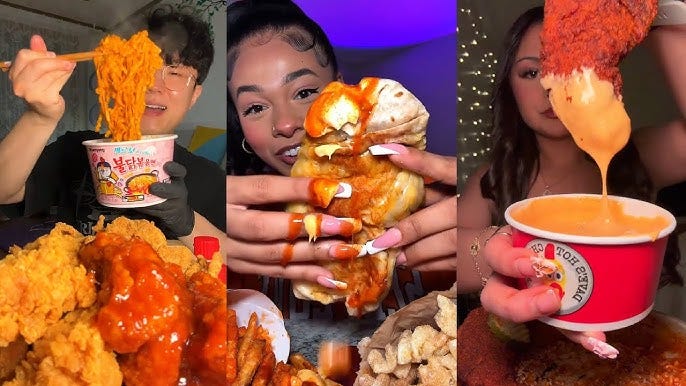
However, this pursuit of maximal craveability has led to what consumers recognize as extremely formulated, ultra-processed food. Think Takis and Doritos — products with intense, memorable flavors that you can almost taste just from seeing the package (or even from reading this).
This recognition helped me connect the multiple dysfunctions I see in the food system into one uncomfortable question: Is the industry optimizing for repeated purchase because repeated purchase is the only profit engine?
What struck me was not just that craveability exists as a business goal, but that it can be designed. The logic behind it felt both obvious and unsettling. It pushed me into a deeper set of questions: Is craveability a “good” metric, and does it reliably translate into profitability? If craveability is the golden rule of formulation, what alternative principles can companies follow if the goal is a better food system?
That cluster of ideas has stayed with me because it changed how I interpret both product strategy and consumer behavior (that also happens to be the longer-term goal of Rooted Eats!).
What’s changing about our cravings?
The idea of craveability as a metric might change very soon. It will still be a very important measure for a food company deciding which product stays on the shelf and which gets cut. But in the era of GLP-1s — drugs that measurably suppress appetite and food noise — certain chemical compounds and flavors may not deliver the craveability scores they once did. The data is already reflecting this.
According to market research company Circana, snack and confectionery categories are down approximately 12%, with an estimated $32 billion in annual US CPG sales lost as GLP-1 users simply buy less.
In simple terms, these drugs are simply making us crave less.
What does that mean? It means food will need to work as a whole package. Craveability will no longer be solely about flavor. The weight of branding, images, aesthetics, storytelling, and even the feel of your packaging has become so much more important in building the psychological craveability of food.
In my opinion, for CPG brands with a mission, this is the moment to invest in clean ingredients, bold aesthetics, and sustainable storytelling more than ever to build a craveable identity.
Think Jeni’s Splendid Ice Creams, a certified B Corp with a sourcing story behind every flavor. Or LesserEvil, whose CEO once said that redesigning their packaging around the Buddha mascot was “one of the best ways we’ve ever spent money.” In a crowded snack aisle, the feeling a bag gives you is half the product (whether these brands eventually get bought by a conglomerate is another story).
In this shift, the hospitality industry and restaurant owners also have a unique advantage: The ability to create craveability through physical space, from interior décor to the full eating experience. I believe restaurants with a sharp, distinct takeaway experience will have an easier time building something truly craveable.
Think about how specific that pull can get. When I want an easy, unhurried dinner with a couple of friends and no long commitment, I think about KazuNori (Nozawa Group). When I want to host a warm hang where the table feels effortlessly festive, I think about Boqueria (Boqueria Restaurant Group). Quality Italian (Quality Branded) for a romantic New York style dinner. Le Veau d’Or (Frenchette Group) when the budget allows for an intimate occasion. The Grey Dog or Eataly when I want to take family somewhere that genuinely feels like everyone is welcome.
None of these restaurants are trying to be everything to everyone. Each one has a specific feeling it owns, and that’s exactly why I keep going back.
A note for the curious eater
For consumers like you and me, this is all a reminder that cravability is manufactured.
It’s not a conspiracy, it’s a business model. Next time you’re fiending for a snack, look for what a brand is actually optimizing for. Is the hook the flavor, or is it the story, the values, and the experience? Those are very different invitations.
Seek out evidence about the foods you consume, and good luck staying clear from fear-mongering!
💞 A queer-owned business to support this June
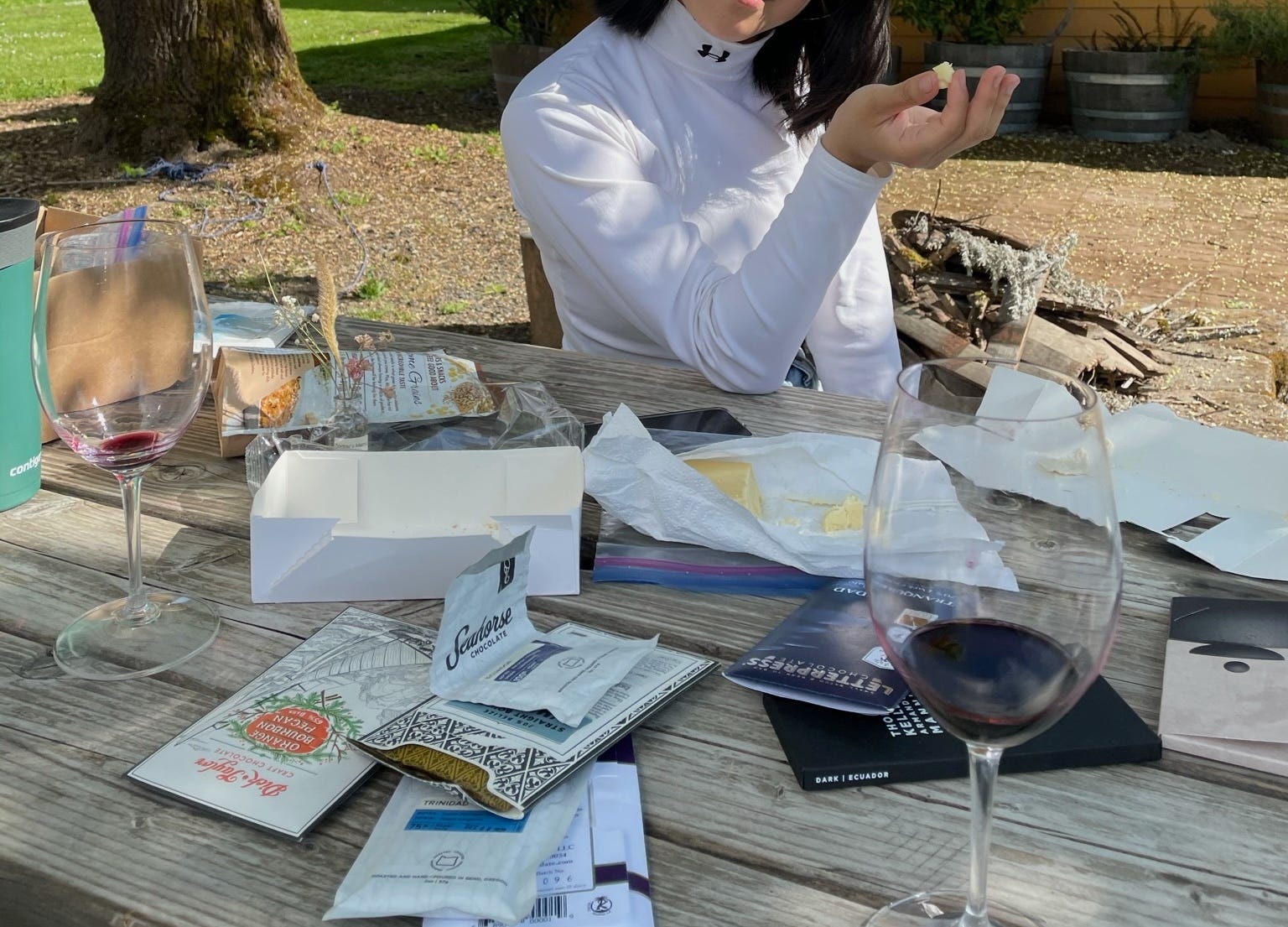
This Pride Month, I want to raise a glass to Remy Wines, founded by Remy Drabkin — one of the first openly queer winemakers in the Willamette Valley in Oregon. I visited the vineyard, and the land and people both left a real impression on me.

What I find genuinely inspiring is that in one of America’s newer winemaking regions, Remy goes old world-style Italian. Her Nebbiolo and Sangiovese are distinct in quality and easy to drink, and I say that as someone who chooses wine by taste, not by label. The Sangiovese pairs beautifully with single-origin chocolate. Support the winemaker and order a bottle here: https://remywines.com/shop/
🥜 Food Fixations
Britney here, bringing us back to a section we envisioned as a staple in this newsletter when it was just a concept.
I am very susceptible to my cravings, as I’ve learned the best way to get over them is to give in to them (tread carefully, dear reader). Sometimes they come to me in the form of a yellow tag at Whole Foods advertising a reduced price (by like 40 cents or so, but still).
That’s what happened with Justin’s almond butter packets. 95 cents for one serving of almond butter sounds nuts to a girl like me who has been conditioned to go for the most affordable option. But I’ve been eyeing these things for years, and something something treating myself because it’s $1 that would probably go to something else useless, I bought a few to try. They are magical. Specifically, the chocolate hazelnut and honey versions.
The math in my head was that the packets would end up being cheaper than buying a whole jar of store-brand almond butter because what if I lose this craving quickly (as I often do) and then it’s sitting there wasting away?
By the time I’m writing this, the obsession has faded some, but that’s probably because I’ve been low on supply and unwilling to shell out the extra 50 cents to get more. I also know that as soon as I commit to buying the full jar, I’ll develop the ick for it. Anyways, I’ve moved on to other fixations that you’ll probably hear about in the next newsletter.
Until next time! 🫶